

For a small business, being visible to people in the right location can be more valuable than attracting large amounts of untargeted traffic.
Someone searching for “digital marketing agency near me,” “salon in Gurugram,” “best bakery in my area,” or another location-specific service already has a clear local intent.
That is where local SEO can help.
Local SEO is the process of improving your online presence so that people searching for products or services in a particular area can discover relevant information about your business.
It is not simply about adding a city name to your website. A practical local SEO strategy brings together your business profile, website, local content, customer information, reviews, legitimate business listings and overall online presence.
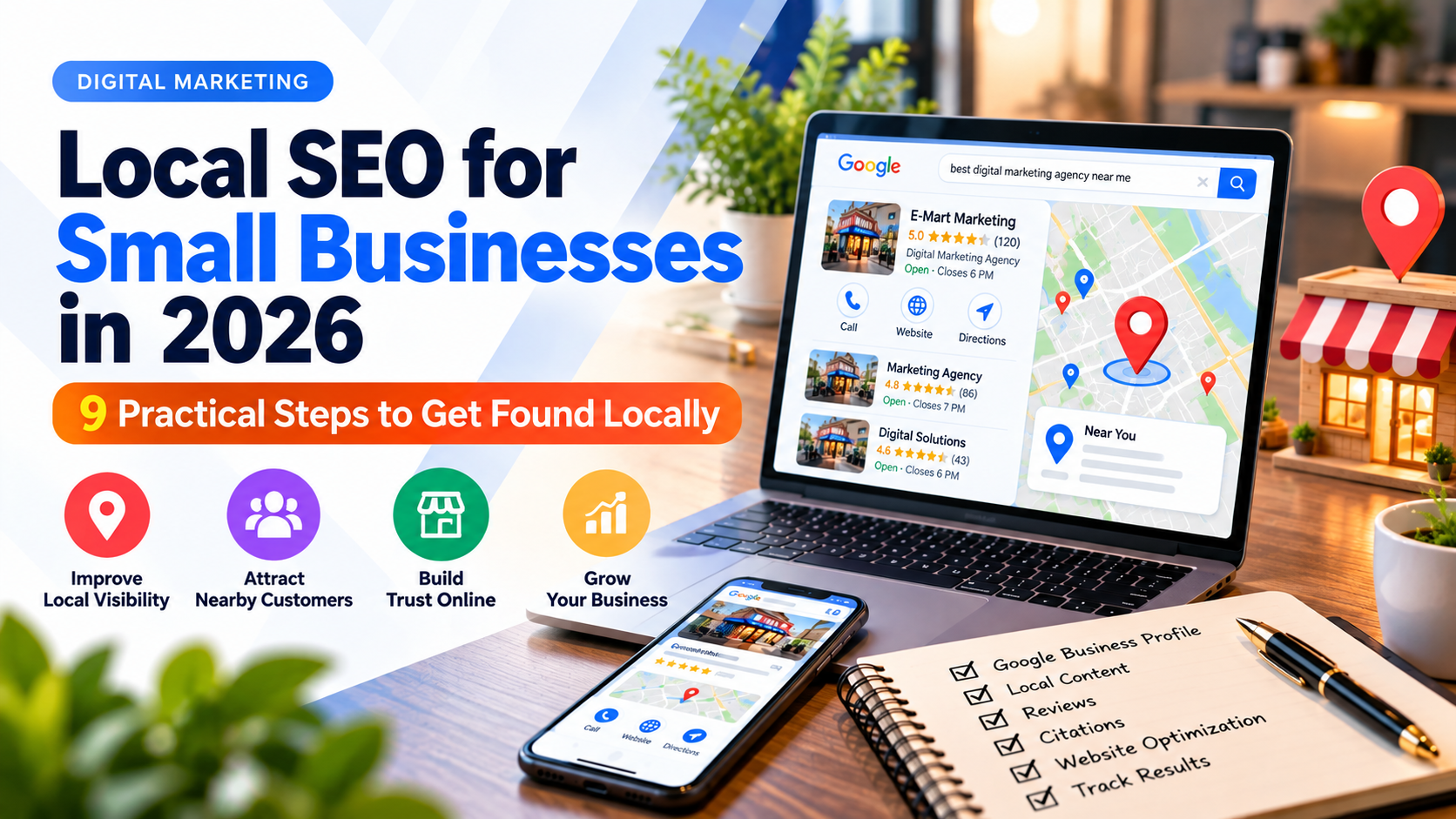
Nine practical local SEO steps that small businesses can use to strengthen their local online presence.
1. Create and Maintain an Accurate Google Business Profile
Your Google Business Profile is an important place where potential customers can find information about your business.
Keep your business information accurate and consistent, including:
- Business name
- Primary business category
- Phone number
- Website
- Business hours
- Service area
- Business description
- Relevant business photos
Avoid adding information simply because it contains a keyword. The goal is to provide customers with accurate and useful information.
2. Make Your Website Location-Relevant
Your website should clearly explain where you provide your services.
If you genuinely serve a particular city, region or service area, explain that naturally on relevant pages of your website.
Useful locations for this information can include:
- About page
- Contact page
- Service pages
- Relevant local landing pages
- Business information in the footer
Don’t create dozens of almost-identical pages simply by changing the city name. A location page should provide genuinely useful information for the people it targets.
3. Create Service Pages Around Real Customer Needs
A local customer doesn’t always search for your business name.
They may search for a service together with a location or use a phrase such as “near me.”
Examples include:
Your service pages should explain what you actually offer, who the service is for, how the service works and what a customer can expect from the process.
Keep the language natural rather than repeatedly inserting keywords.
4. Publish Useful Local Content
Local content doesn’t have to be complicated.
The best starting point is usually a genuine customer question or problem.
For example, a marketing agency could publish:
A restaurant could publish:
A fitness business could publish:
The important part is that the content should answer a genuine customer question instead of existing only to target a keyword.
5. Keep Your Business Information Consistent
Check the information about your business across the platforms where you have created legitimate business profiles.
Pay particular attention to:
- Business name
- Website
- Phone number
- Business category
- Address or service area
If information becomes outdated, update it rather than creating another listing.
Don’t create multiple fake business listings simply to obtain additional links or visibility.
6. Build Genuine Customer Reviews
Reviews can help potential customers understand other people’s experiences with a business.
Ask genuine customers for honest feedback after they have used your product or service.
Businesses should avoid:
- Buying reviews
- Creating fake reviews
- Creating reviews for themselves
- Pressuring customers to provide misleading feedback
The objective should be to build a trustworthy online presence.
7. Earn Relevant Local Mentions
Local SEO can also benefit from legitimate mentions of your business.
Depending on your industry, these might include:
- Local business directories
- Industry associations
- Relevant local publications
- Business communities
- Professional profiles
- Relevant local partnerships
Focus on relevant and legitimate websites rather than collecting a large number of low-quality links.
8. Improve Your Website Experience
Local visitors still need a good website experience after clicking your listing.
Check that:
- The website works properly on mobile devices
- Contact information is easy to find
- Important pages load efficiently
- Buttons and forms work correctly
- Navigation is clear
- Pages contain useful information
- Images are properly optimized
9. Measure What Is Actually Happening
Don’t judge your local SEO strategy only by whether your website appears for one keyword.
Track useful indicators such as:
- Search impressions
- Search clicks
- Website enquiries
- Calls
- Contact form submissions
- Business Profile interactions
- Important service-page traffic
- Relevant local search visibility
A Simple Local SEO Checklist
Use this checklist when reviewing your local SEO foundation:
Final Thoughts
Local SEO is not one action that produces instant results.
It is an ongoing process of making your business information clearer, your website more useful and your online presence more trustworthy.
For a small business, the practical starting point is simple: make sure customers can understand what you offer, where you offer it, and how they can contact you.
From there, build useful content, maintain legitimate business profiles, improve your website and measure what actually brings relevant visitors and enquiries.
Need Help With Your Local Digital Presence?
E-Mart Marketing provides SEO, Local SEO, website development, content marketing, social media marketing and digital marketing strategy for businesses looking to strengthen their online presence.
Talk to E-Mart Marketing →